
 Image 1 of 3
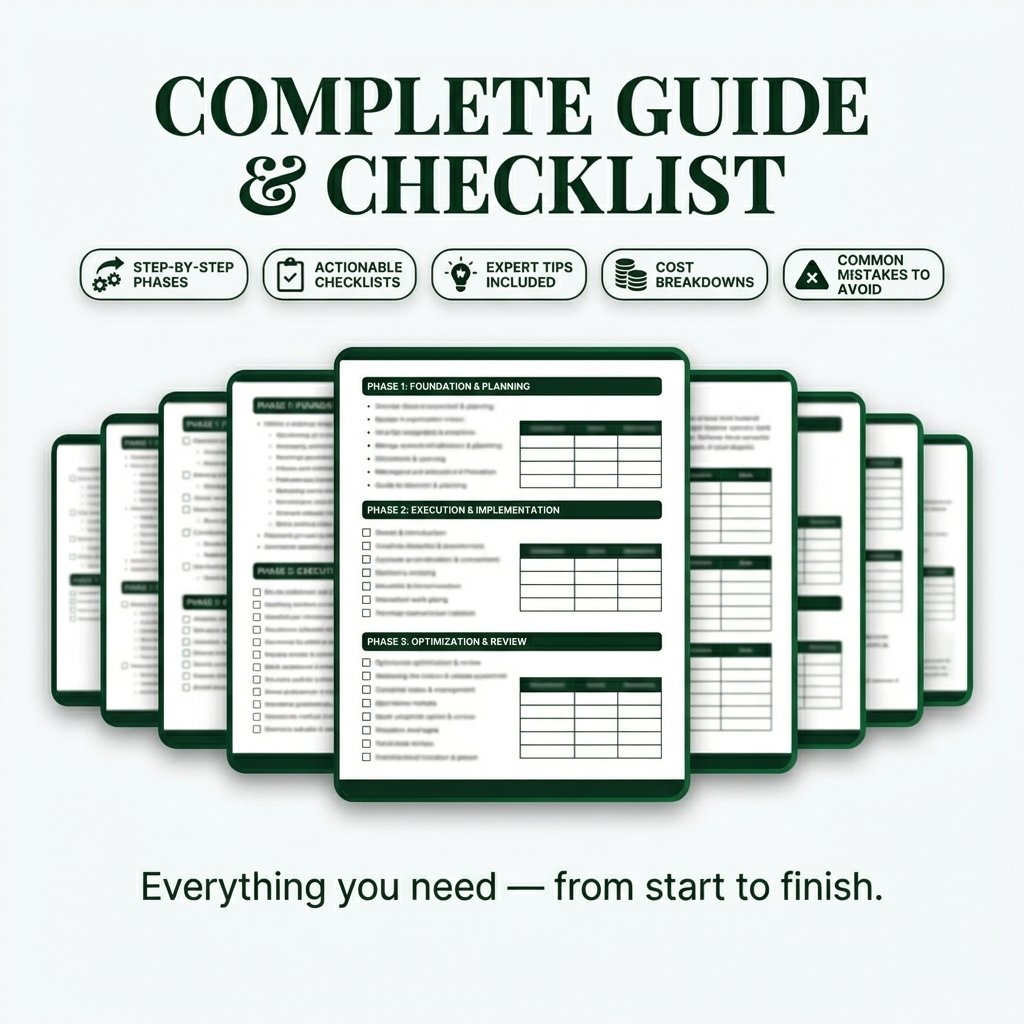 Image 2 of 3
 Image 3 of 3
The Complete Home-Buying Guide & Checklist is the only resource that takes you through the entire purchase process — from cleaning up your credit and saving for a down payment to signing at the closing table and settling into your new home.
This isn't a mortgage company brochure. It's a 10-page, step-by-step action plan organized into 8 clear phases:
Phase 1: Financial Preparation (credit, debt, savings, and true affordability)
Phase 2: Assistance Programs & Mortgage Prep (first-time buyer programs, loan types, and every document you'll need)
Phase 3: Mortgage Pre-Approval (how to compare lenders, what pre-approval actually means, and when to lock your rate)
Phase 4: House Hunting (building your team, defining criteria, researching neighborhoods, evaluating properties)
Phase 5: Making an Offer & Negotiations (comps, contingencies, earnest money, and how to negotiate)
Phase 6: Under Contract (inspections, appraisal, title, underwriting, and what not to do while you wait)
Phase 7: Closing Day (final walkthrough, what to bring, what you're signing, and how to avoid wire fraud)
Phase 8: Post-Closing & Move-In (first week, first month, and ongoing homeownership)
You'll also get:
A complete document checklist — every financial record, tax form, and piece of paperwork your lender will ask for, organized before you need it
A full breakdown of first-time buyer programs — FHA, VA, USDA, Fannie Mae HomeReady, state HFA grants, and employer assistance programs most buyers never know to ask about
9 types of specialized inspections — from radon and mold to lead paint and foundation engineers, with guidance on when each one applies
12 common mistakes to avoid — including the ones that can kill your deal after you're already under contract
Most home-buying guides stop at "get pre-approved and find an agent." This one keeps going — through the inspection negotiation, the appraisal gap, the underwriting black hole, and the post-closing steps that protect your investment for years to come.
The Complete Home-Buying Guide & Checklist is the only resource that takes you through the entire purchase process — from cleaning up your credit and saving for a down payment to signing at the closing table and settling into your new home.
This isn't a mortgage company brochure. It's a 10-page, step-by-step action plan organized into 8 clear phases:
Phase 1: Financial Preparation (credit, debt, savings, and true affordability)
Phase 2: Assistance Programs & Mortgage Prep (first-time buyer programs, loan types, and every document you'll need)
Phase 3: Mortgage Pre-Approval (how to compare lenders, what pre-approval actually means, and when to lock your rate)
Phase 4: House Hunting (building your team, defining criteria, researching neighborhoods, evaluating properties)
Phase 5: Making an Offer & Negotiations (comps, contingencies, earnest money, and how to negotiate)
Phase 6: Under Contract (inspections, appraisal, title, underwriting, and what not to do while you wait)
Phase 7: Closing Day (final walkthrough, what to bring, what you're signing, and how to avoid wire fraud)
Phase 8: Post-Closing & Move-In (first week, first month, and ongoing homeownership)
You'll also get:
A complete document checklist — every financial record, tax form, and piece of paperwork your lender will ask for, organized before you need it
A full breakdown of first-time buyer programs — FHA, VA, USDA, Fannie Mae HomeReady, state HFA grants, and employer assistance programs most buyers never know to ask about
9 types of specialized inspections — from radon and mold to lead paint and foundation engineers, with guidance on when each one applies
12 common mistakes to avoid — including the ones that can kill your deal after you're already under contract
Most home-buying guides stop at "get pre-approved and find an agent." This one keeps going — through the inspection negotiation, the appraisal gap, the underwriting black hole, and the post-closing steps that protect your investment for years to come.